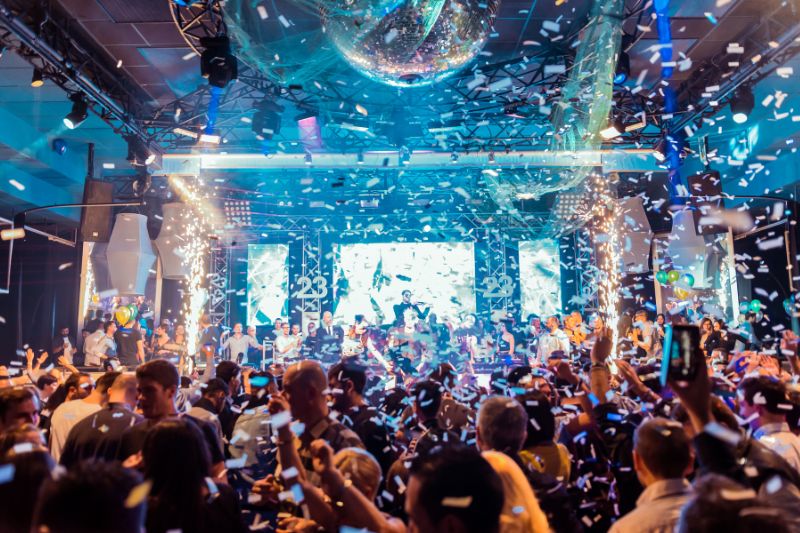
Milan has spent the last decade assembling the kind of corporate events infrastructure that most European cities only discuss in strategic planning documents, and the results are now visible in the rankings: third place in Europe for large-scale business events, behind London and Paris, with 90 gatherings of at least a thousand participants recorded in 2024 alone, representing a 6% increase on the previous year and a trajectory that shows no sign of levelling off.
The continental picture provides useful context for understanding just how significant that position is, given that Europe hosted 3,057 large events in 2024, up 7% from 2023 and 19% above pre-pandemic levels, with 88% of activity concentrated in just 15 countries, meaning that Milan's third-place standing places it among a genuinely elite group of destinations competing for the attention of the world's most mobile professionals.

Italy as a whole registered 397 events across 33 cities, an 8% rise on 2023, cementing its position as third among European nations in a sector that Giovanni Bozzetti, president of Fondazione Fiera Milano, describes with some precision as "a genuine enabling infrastructure for knowledge, capital, and innovation" — a characterisation supported by the fact that Milan's international delegates generate a direct economic return of approximately USD 237 million annually, a figure that speaks to the calibre and spending power of the professionals the city now routinely attracts.
Congress centres account for 32% of the city's major events, with trade fair and convention facilities handling a further 30%, and it is this combination of intellectual and commercial infrastructure, operating at scale and in parallel, that gives Milan a structural depth that rival European destinations are finding increasingly difficult to replicate.
What Fiera Milano built
Fiera Milano, the vast exhibition complex at Rho on the city's north-western edge, has done more than any single institution to establish Milan's reputation as a serious corporate events destination, drawing together professionals from manufacturing, fashion, food technology, luxury goods, and medical science in a calendar that treats the convergence of different industries as a feature rather than an accident of scheduling.
The venue's operational sophistication matches its physical scale, and event managers with experience across multiple European capitals tend to rank it among the best-run facilities on the continent, precisely because its modular design allows it to absorb a 3,000-delegate pharmaceutical congress one week and a precision-engineered product launch the next without any visible strain on logistics or service quality.
Paired with MiCo, Milano Congressi, Italy's largest dedicated congress centre, the city effectively offers two world-class anchors serving complementary professional communities, and the combined drawing power of these two institutions has been central to Milan's ability to attract the kind of recurring, high-value events that build long-term destination reputation rather than one-off spectacle.
Infrastructure as a long-term competitive strategy
Milan's rise in the European MICE rankings reflects investment decisions taken years in advance of the results they produced, with the post-Expo 2015 regeneration of the Portello and CityLife districts delivering new hospitality stock, improved transport connectivity, and a physical environment of sufficient modernity to satisfy the expectations of international corporate clients who measure a destination as much by its logistics as by its scenery.
The Milano Cortina 2026 Winter Olympics are continuing this process of infrastructural renewal at pace, with Bocconi and Ca' Foscari universities estimating that the Games will generate over EUR 5 billion in net economic impact for Italy and create 36,000 new jobs, a projection that reflects the scale of investment in transport, venues, and urban regeneration already underway across Milan and the wider Lombardy region.
Governor Attilio Fontana has pointed to the post-pandemic recovery as proof that major events function as genuine economic catalysts, citing the Salone del Mobile's role in relaunching Lombardy's international profile as a model for what sustained commitment to large-scale programming can achieve, while Minister Daniela Santanchè has argued that the combined legacy of Expo 2015 and the 2026 Games has established Milan as a permanently international city rather than an occasional one.
The ecosystem that extends beyond the flagship venues
Milan's corporate events culture extends well beyond its headline venues, encompassing fashion weeks, financial roadshows, technology summits, and scientific congresses that collectively attract a delegate profile generating significant secondary spending, long-term commercial relationships, and the kind of reputational lift that compounds over time into genuine destination prestige.
YesMilano Convention Bureau data captures the breadth of this activity, recording hundreds of mid-sized events in Milan annually hosted in boutique hotels, converted industrial spaces, and design studios, many of them driven by the SMEs and fast-growth startups that have made Milan one of Europe's more interesting cities for professional networking outside the traditional conference circuit.
Security and event management standards have evolved in step with the growing sophistication of demand, with international delegates — particularly those travelling from the Middle East and Asia — bringing expectations around controlled access, VIP protection, and real-time risk management that Milan's professional services sector has adapted to meet, to the point where operational quality is now cited alongside physical infrastructure as a factor in destination selection by experienced corporate event planners.
What Milan's ascent means for European business
Corporate events accounted for 47.78% of total MICE activity across Europe in 2024, with the continent holding a majority share of the global market, and Milan's growth in business events reflects a city that has made a coherent, long-term case for itself as a place where finance, design, science, and commerce arrive in the same room and find the experience worth repeating.
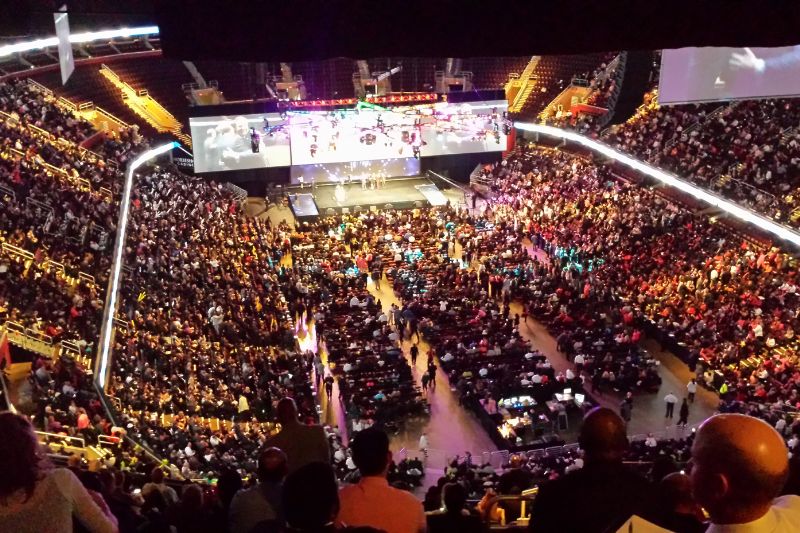
The meeting industry has always rewarded cities that understand what professionals actually need when they travel for work — venues that function, logistics that hold, and an urban environment compelling enough to make the journey feel worthwhile — and Milan, across all three of those measures, has built something that the rankings are only beginning to fully reflect.