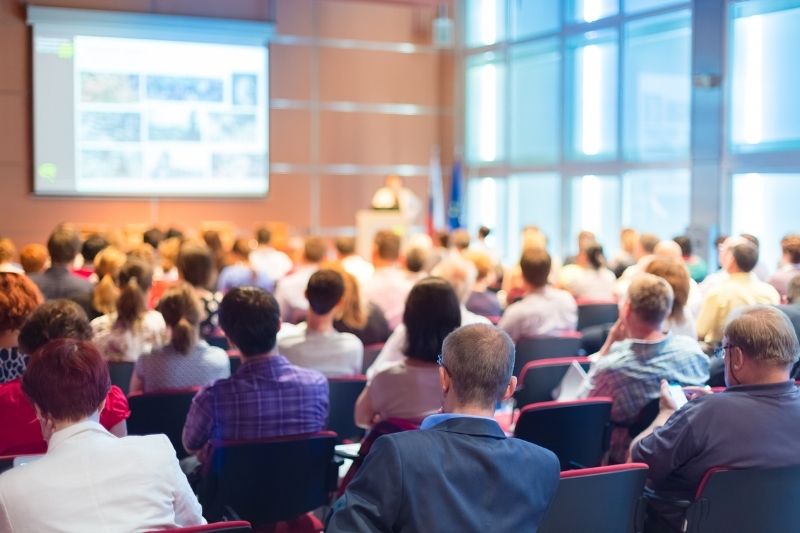
There was a moment, during the pandemic, when we collectively tried to convince ourselves that virtual, long-distance experiences and events were indistinguishable from the real thing. We can now safely say that's not the case. Virtual or hybrid events do have a place in this industry and they come with many perks, from accessibility and inclusivity to the possibility of reaching worldwide audiences with the exact same conference or speech, but they hit different spots when it comes to judging immersive experiences. Since the gradual return to live gatherings, we can confidently say the overall awareness of how events look and feel in the moment and on location has grown.
Corporate events redefined: the rise of immersive experiences
There was a moment, during the pandemic, when we collectively tried to convince ourselves that virtual, long-distance experiences and events were indistinguishable from the real thing. We can now safely say that's not the case. Virtual or hybrid events do have a place in this industry and they come with many perks, from accessibility and inclusivity to the possibility of reaching worldwide audiences with the exact same conference or speech, but they hit different spots when it comes to judging immersive experiences. Since the gradual return to live gatherings, we can confidently say the overall awareness of how events look and feel in the moment and on location has grown.
Audiences are no longer impressed only by the two-factor combination of high-production visuals and impactful content, as they were when leaving the house was not an option. Now, they rightfully expect in-person events to be worth every secondo of their time, they want to step into stories, shape outcomes, and leave feeling like they were part of something unique, otherwise, what's the point? No brand can get away with events that "could have been an email" anymore.

The design language of immersive experiences
The fact that visuals are not the only relevant element anymore, of course, does not mean that we get to underestimate them. On the contrary: the visual effort required to make an event stand out has increased manyfold since before the great pandemic divide. Brands are now transforming venues into immersive environments that communicate identity, drive engagement, and create meaningful audience connection through strategic storytelling, scenic design, technology. Sensory details of all descriptions are expected to work together to turn physical spaces into fully realised brand worlds in which every material choice carries meaning.
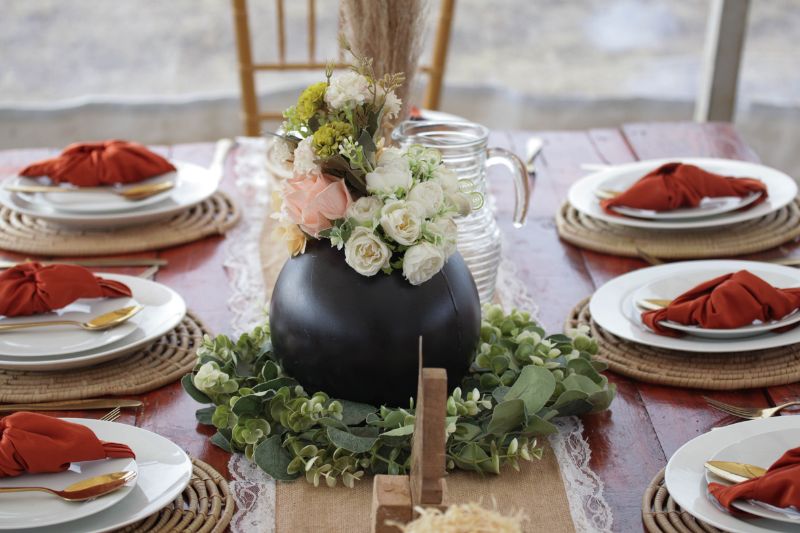
Colour palettes, for instance, are widely known to influence mood in measurable ways, while architectural and sculptural installations, as well as floral arrangements, can be used to convey a brand's character and enhance the event's message. Generally speaking, event design trends in 2026 are rooted in materiality, colour, texture, and spatial flow, with a focus on warmth, depth, craftsmanship, and, for an increasing number of brands, sustainability.
The visual identity of an event should flow seamlessly and consistently, from the invitation through to the staging, the lighting, the exit. Of course, that works much better if you happen to have a variety of events to choose from. For instance, if your vibe is classical, prestigious, and sophisticated, you will have a much easier time setting your immersive experience in a XIX century villa on the outskirts of Milan, rather than attempting to recreate that character in a modern venue. In the same way, if your brand is all about innovation, technology, and the latest developments in your technical field, then you might want to move away from the villa and choose a high-tech venue, with sleek interiors, minimalist decor, and pre-installed state-of-the art event tech.
Immersive storytelling and the multi-sensory shift
The modern corporate event is, essentially, a narrative. Guests move through it chapter by chapter, whether they realise it or not, and the most sophisticated event producers design their gatherings accordingly.
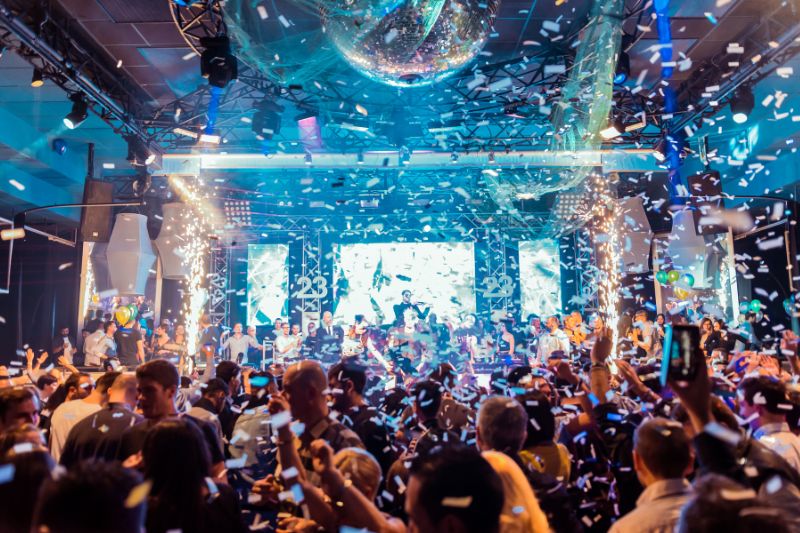
Not to be confused with decor, multi-sensory environments use scent, texture, spatial design, and lighting together to create deeper sensory moments that support a brand message or theme. Custom soundscapes, branded fragrance experiences, projection mapping that transforms entire rooms from floor to ceiling are increasingly appealing to the corporate sphere.
The most innovative immersive event ideas combine advanced technology, bold theming and multi-sensory design, with AI-powered installations and projection-mapped rooms turning guests from observers into active participants. That distinction, observer versus participant, is perhaps the most important one in contemporary event design: passive attendance produces forgettable evenings, while genuine participation produces loyalty.

Personalisation at scale: making every guest feel considered
Personalisation was once considered a nice flourish reserved for weddings or ultra-high-net-worth clientele and now, like most luxuries, it's the baseline of an acceptable service. The era of one-size-fits-all programming is fading fast: attendees now expect tailored experiences, from curated arrivals to personalised content, gifting, and post-event follow-ups.
This requires considerable thought at the planning stage, to set up spaces such as VIP welcome suites, to plan interactive installations where guests personalise keepsakes, and many other options that can contribute to turning corporate events into immersive experiences. VIP areas are also evolving into fully immersive, design-led environments: curated worlds with rich textures, luxury draping, sculptural décor and contemporary lounge furniture, deliberately designed to make guests feel valued and seen.
The result, when executed well, is that every person in the room leaves believing the event was made, at least in part, for them. That is an extraordinarily powerful brand outcome.
Venue and atmosphere: where strategy meets sensation
Venue selection, of course, has always mattered, what's changed is why it matters. A venue is a fundamental storytelling tool and its atmosphere is the sum of a hundred deliberate decisions: the temperature of the lighting, the acoustics, the sightlines, the scent in the air as guests arrive.
Venues that lend themselves to transformation, those with architectural interest, unusual proportions such as original open spaces, or inherent drama, offer event producers the raw material to create something genuinely memorable. Add to this the fact that experiential technology for events has developed rapidly and now allows for endless customisation that can be as easy as color-coding the decor or as complex as setting up a visual, auditory, olfactory and even tactile journey through the venue, as your guests experience the brand values you have chosen to convey.
What lasting impact actually looks like
Measurement in events has historically focused on attendance figures and post-event surveys. The new benchmark is more elusive and considerably more valuable: emotional resonance. Did guests feel something? Did the experience deepen their connection to the brand? The kind of metrics that require qualitative analysis are now to be added to those that can be evaluated through quantitative surveys.
Design, storytelling, personalisation, and atmosphere are the interlocking elements of a single ambition: to make guests feel, belong, and then come back for more. Brands that understand this are better events and, therefore, building deeper relationships with their audiences.