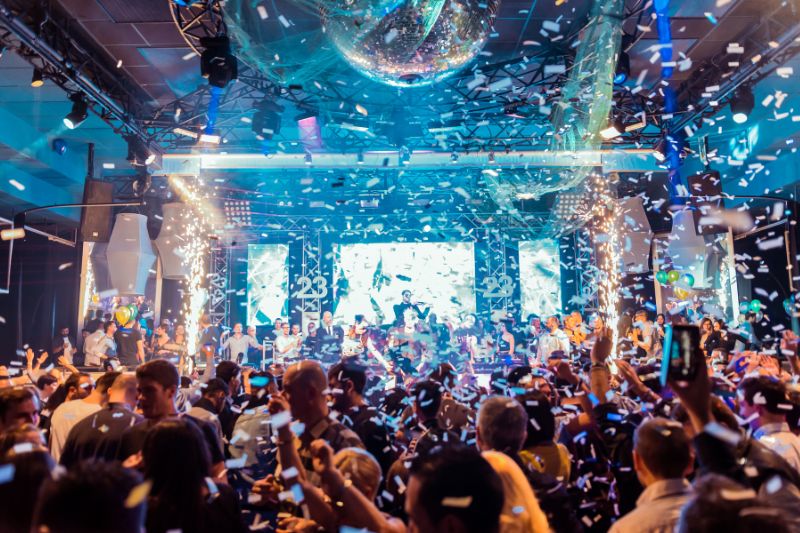
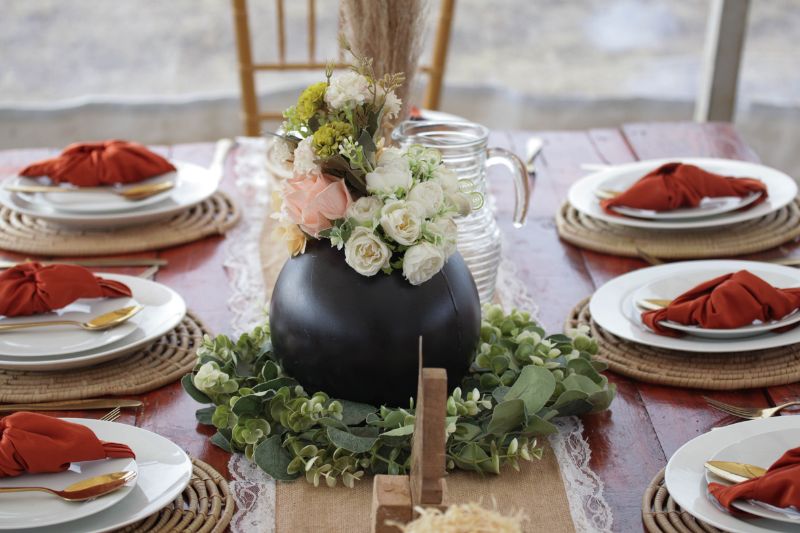
Do you know who the worst enemy of an event planner is? Pinterest. Yes, we use it for moodboards, yes, we encourage clients to give us a visual impression of what their ideal event should look like. But sometimes, the client's representative will end up looking up the exact venue they found on there or on Instagram and then walk into a call having already fallen in love with it, crucially without having done any research on whether or not the venue is at all suitable for their event. Gorgeous light, incredible skyline, absolutely the wrong place for four hundred people and a live stream to Singapore, and yet she wants it anyway.
This is the moment where event planners either nod along and hope for the best, or say the thing nobody wants to hear: that's not going to work, and here's why. But hang on, you thought the customer was always right? We have a few things to unpack…
At Milanvenue, we've had this conversation and lived through this dynamic more often than we care to remember. So let's settle the question of the old saying, and let's admit that, in event planning at least, it needs a few caveats.
Competence matters: event planners know what they are talking about, when they advise against a venue
Retail, especially overseas, taught the world that "the customer is always right", and we collectively accepted that this was always the case. Fair enough: it works well when choosing between two jumpers, but events are a different matter entirely. A client can be set on a specific venue, match it with a date, decide on a format, and end up steering the whole thing into a wall, because they focused on the room rather than the logistics. The venue might have the right vibe, but the wrong capacity for the guest list, its acoustics might turn a sharp keynote into grinding noise, none of which is evident from the venue's official Pinterest photo sets, but, by the time the hiccups emerge, they can no longer be fixed or, at least, not within the original budget.
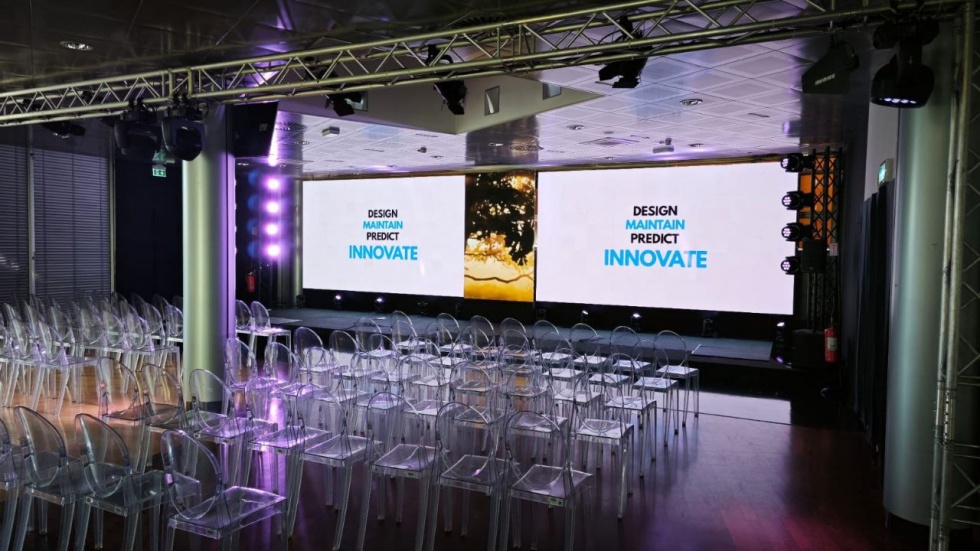
This is where authentic expertise earns its keep, in that almost undetectable gap between the moodboard and the real world. A planner who agrees with everything the client says because "the client is always right" isn't being either helpful or professional, but rather they're being and expensive accessory to a badly done job. The job in question, of course, is knowing when a beautiful idea needs a friendly but firm "no", and a better one needs to be suggested instead. Corporate events carry a certain amount of much financial weight, enough to make risk-taking a bad idea. Therefore, clients hire event planners so they don't discover, live and in front of the board, that the broadband can't handle a live-stream or the local council rules limit live music and dancing after 10 pm.
The customer, however, is indeed always right about one thing: they call the shots on what they need the event to achieve for them. Which is why, before a single venue suggestion is made, we ask each and every one of our clients what the end goal is. Is it closing a deal with an important client? Are we celebrating a team after a brutal year or an outstanding milestone? Are we launching an innovative product? We then ask about the mood, the elusive "vibe", because a solemn briefing and a Christmas party for four hundred people definitely don't go well together. Are we going for light-hearted or professional? Serious, but relatable? Optimistic? Formal and institutional? We don't get to decide any of that: the client does.
Only once those answers are locked in do we jot down a proper technical list: technical needs, catering preferences, accessibility requirements, budget constraints. Venues, despite our brand name, come last. However tempting it might be to lead with the pretty pictures, we need to remember that they are the packaging, not the product.

What the client is always right about
What makes an event successful? Is it enough for the client's brief to get ticked off, on schedule and under budget? Not really. An event succeeds or fails based on what the actual human beings in the room experienced and the client might not be the best judge of that.
Focusing on the guests
Our experience and industry research both confirm that attendees increasingly expect events to reflect their own interests and cater to their sensibilities, and they respond poorly to generic programming that feels cookie-cut. Hilton's own gathering research paints an even sharper picture: guests want career relevance and real human connection, as well as a schedule that doesn't leave them frazzled by lunchtime. Some are there to network and mostly care about having the right handful of conversations with interesting prospects, while others demand dense, purposeful content that they can take back to their desk. A fair few obsess over the organisational details, judging the host's entire personality and brand image by how chaotic the queue is. Plenty of attendees simply want to have a good time.
Miss that balance and an event-planning team can hit every KPI, while the audience mentally checks out within the first hour. A happy client is almost always a direct consequencde of happy guests, which in turn become future clients and referrals.
The importance of pacing in corporate events
One major pitfall of corporate are overloaded agendas. Recent research found that a striking share of attendees worry about insufficient time between sessions, and more than half will skip one or several altogether just to decompress, because no proper break has been scheduled into the day.
Building in transition time and trimming session blocks costs nothing extra on the invoice, yet it's routinely ignored under deadline pressure, remaining one of the cheapest ways to lift satisfaction without impinging upon the budget line.
Should you argue with a client?
So no, the customer isn't always right about the venue, the format, or the technical detail, but how should we tell them? Also, they are always right about what they're trying to achieve, and that's the compass every one of our decisions points back to.
We built our whole process around that distinction: goals first, technical requirements second, venues last, because Milan has no shortage of jaw-dropping spaces and most are wrong for at least one client who's fallen for them anyway. Steering people toward the venue that genuinely works, then making the day feel like the best of Italian hospitality, warm, theatrical, organised behind the scenes and never boring, happens to be our favourite part of the job. Arguing, however, is not part of the plan: we should accompany, not push the client along the right path. And the main tool to achieve this is professional credibility: if you are confident and you can absolutely prove you know what you are talking about, clients will be more likely to follow your lead, rather than argue over technical details. And, of course, every slight contrast will be forgotten, once a stunning event gets delivered.