Here's an uncomfortable little truth about our industry: a flawlessly executed event can still be forgotten by Monday morning. We all flatter ourselves that each and every one of our events can be life-changing to its attendees, but, realistically, corporate events seldom are. Every timing sheet hit its mark, every canapé arrived at the correct temperature, and yet three weeks later nobody can quite remember what the fuss was about. Which doesn't mean they can't be memorable and leave participants hoping they get to experience something similar again.
Psychology has a rather blunt explanation for this: we don't file experiences away in full, but we retain the peaks and the endings, discarding most of what happened in between. And still, an enormous number of business events get planned as though every single element deserves equal weight, without anyone stopping to ask what memory is actually meant to survive the following morning.
Taking all of this into consideration, we strive to approach event planning by designing the emotional arc that guests will move through from the first handshake to the last goodbye, and then building upon it, creating details and tweaking moods around that main concept. Because success at any gathering, corporate parties included, is achieved when your event becomes the paragon of how events in the same category should work. If attendees commission future events to be like the one you just organised, then you know you must be doing something right.
The psychology of successful event planning
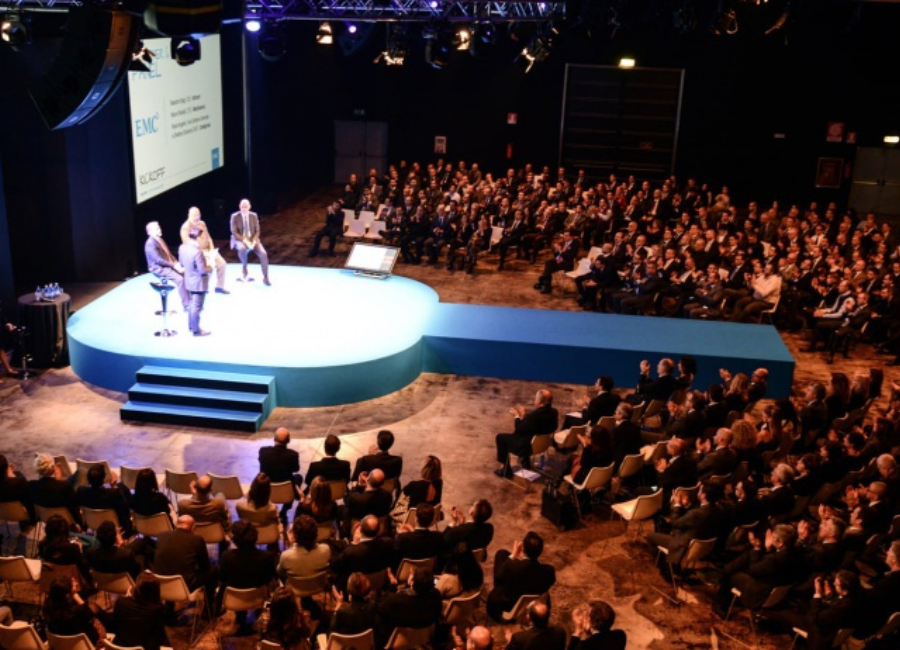
Event planners tend to measure success through the lens of execution: did the schedule hold, did the AV work, did the buses arrive on time? Guests measure things rather differently, and their scorecard has nothing to do with your run sheet. They remember whether the room felt welcoming, whether they felt swept into the action or left standing awkwardly by the bar, whether the whole affair felt premium or slightly rushed at the edges. Two business events with identical programmes can leave wildly different impressions on the people who attended, purely because one was built on emotional cues and the other, however competently run, wasn't.
Do you know how people say the first impression is what matters, in business relationships or job interviews? Events are the same. Guest perception forms almost instantly, and there's precious little you can do to reverse a poor start once it's happened. The arrival sequence, registration flow, and the ambience that hits people the second they walk through the door set the emotional tone for everything that follows. Get the welcome warm and effortless, and comfort and openness follow naturally. Get it slow, confusing, or cold, and you'll be fighting an uphill battle for the rest of the evening, no matter how spectacular the main programme turns out to be.
Guiding your audience's perception
Do you like similes? No? Too bad, you're about to get one! What grabs you first, when you look at a painting? Unless you are a painter yourself, your eye will be drawn first by a sweeping impression: colour, scale, composition, the sheer impact of the thing from across the room. What keeps you standing there and looking, though, is the detail in the individual brushstrokes, and here's the clever bit: most painters won't render every stroke with photographic precision. They guide your eye deliberately toward the details you're supposed to notice, letting the rest blur into supporting texture. Events work along exactly the same principle. Guests fixate on the artwork in front of them, the moments, the reveals, the feeling in the room, while the canvas and the paint (read: the logistics, the load-in schedules, the supplier contracts) remain invisible to them, even though nothing would exist on the wall without that groundwork holding it up.
The engagement conundrum: you can create experiences, you can't make people live them
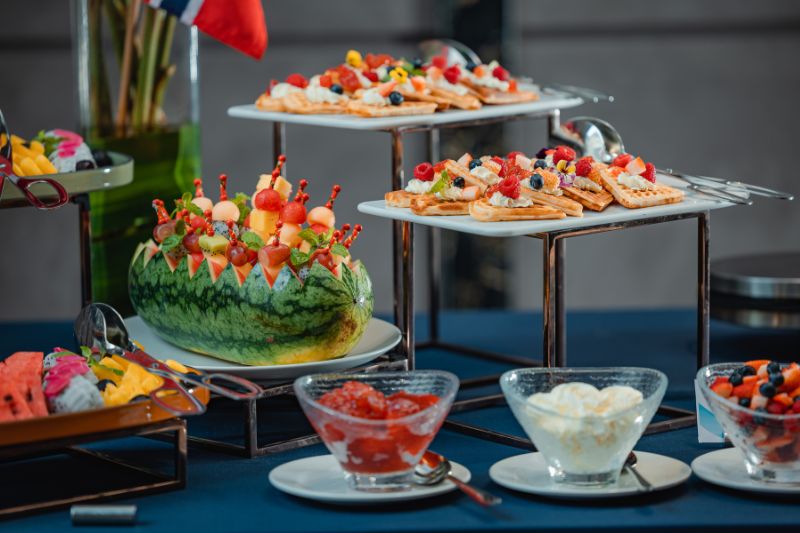
A great many business events attempt to bolt engagement on through forced icebreakers and gimmicky activities, and it rarely lands the way anyone intended. Genuine engagement shows up when guests feel comfortable in the space, clear about where to go, and invited to take part rather than cornered into it. Thoughtful spatial layout, well-paced programming, and a few well-placed fringe experiences will do most of the heavy lifting in this department. Done properly, participation feels like the guests' own idea. Done clumsily, it feels like awkward moments nobody asked for.
Designing with the ending in mind
Rather than starting from what should be included on the agenda, the sharper starting point is what guests should feel walking out of the room. Proud, celebrated, inspired, reconnected with colleagues they'd half forgotten they liked? Once that answer is clear, everything else, from flow to fringe activities to the closing moment, can be built to serve it. This applies just as much to corporate parties and milestone celebrations as it does to meetings and conventions, and it holds whether you're running team building activities indoor in a converted Milanese palazzo or team building activities outdoor across the Navigli.
Guests never take the run sheet home with them. They take home a feeling, and that feeling decides how they talk about your brand, whether they show up next year, and whether your event ever gets mentioned again. Plan for that, and everything else tends to fall rather beautifully into place.